
What Influences Return on Investment Property?
The purchase price matters, but it is only one part of the equation.
Australian Government guidance on buying an investment property highlights that buying, managing and selling an investment property all involve costs that can affect its overall return. Investors should also compare expected income with outgoing expenses and consider whether they could cover costs during periods without tenants.
When assessing return on investment property, investors should look at the relationship between income, expenses, borrowing costs and the capital required to create that income.
Depending on the property and strategy, this may include:
- Purchase price and acquisition costs
- Stamp duty, legal fees and due diligence costs
- Loan repayments and interest
- Renovation or construction expenses
- Planning, certification and compliance costs
- Expected rental income
- Vacancy and tenant turnover
- Insurance
- Utilities where these are paid by the owner
- Repairs and ongoing maintenance
- Property management fees
- Potential capital growth and exit options
The Australian Taxation Office also provides current guidance on residential rental property income and expenses, including the requirement to declare rental income and the rules that apply to rental property deductions.
For co-living investors, there is another layer to consider.
A property may look attractive because it has plenty of bedrooms or sits in a strong rental market, but the existing floor plan, parking, zoning, approval pathway and cost of conversion can substantially change its feasibility.
That is why a good investment property strategy starts with understanding both the property and the numbers before committing to a project.
How Your INVIDA Team Can Improve Return on Investment Property
A good team does more than complete individual tasks. Each professional should help you understand how their part of the transaction affects the bigger picture.
Here are some of the key people worth having around you.
1. The Agent or Property Acquisition Specialist
Everything starts with finding the right property at the right price.
A good real estate agent can give you valuable insight into a local market, including what is selling, what is sitting on the market and what types of properties may be coming up before they are widely advertised.
You can also use a buyer’s agent or property acquisition specialist to search on your behalf. The important point is that they understand your strategy.
Someone sourcing a standard buy-and-hold property may assess an opportunity very differently from a specialist looking for a potential co-living conversion.
For a co-living investment, that brief may need to consider factors such as:
- Block size
- Existing floor plan
- Parking
- Local rental demand
- Access to employment and transport
- Property condition
- Potential renovation costs
- Local planning requirements
INVIDA’s co-living conversion process begins with assessing whether the property itself is suitable for the strategy.
Not every house is a good conversion candidate, and avoiding the wrong property can sometimes be just as valuable as finding the right one.
Turning the Seller’s Agent Into Part of Your Search Team
One strategy I have used over many years is to build relationships with selling agents in the locations I am targeting.
Instead of waiting for the perfect property to appear online, be clear about what you are looking for. Give agents a specific brief and stay in regular contact.
If they know you are serious and understand exactly what makes a property attractive to you, they may think of you when an appropriate opportunity appears, including properties that have not yet been widely marketed.
The key is specificity.
A clear acquisition brief gives agents something useful to look for rather than simply asking them to send you “good investments”.
2. The Property Lawyer
For straightforward residential purchases, a conveyancer may be able to handle many aspects of the transfer process, depending on your state or territory.
However, investors dealing with more complex contracts, ownership structures, building agreements or development-related issues may also benefit from advice from an experienced property lawyer.
The value here is not simply preparing paperwork. It is understanding what you are agreeing to before you are legally committed.
A property lawyer may help you review:
- Purchase contracts
- Special conditions
- Building contracts
- Ownership arrangements
- Other legal documents relevant to the project
They can also tell you when an issue sits outside their expertise and requires input from another specialist.
Trying to save a relatively small amount on professional advice can become expensive if a contract or legal structure does not suit what you are actually trying to achieve.
Protecting return on investment property also means reducing avoidable legal and contractual risk.
3. The Mortgage Broker
A mortgage broker can play an important role in your wider property strategy because the lowest advertised interest rate is not automatically the best finance solution for every investor.
Loan structure, borrowing capacity, lender policy and your plans for future purchases may all matter.
Australian Government information about the risks of borrowing to invest highlights that investment income can be lower than expected, interest rates can rise and borrowers still need to meet their commitments even when an investment is vacant or underperforming.
This is why a good broker should understand more than the current purchase.
Ideally, they should also understand where you want your property portfolio to go next.
For investors planning a conversion or custom build, it is particularly important to discuss the proposed strategy early. Finance should be considered alongside the property and project rather than treated as an afterthought.
A broker who understands your goals can help you assess lending options within the context of your overall investment strategy and the return on investment property you are working towards.
4. The SMSF Specialist

Self-managed super funds are highly regulated, and property investment through an SMSF comes with specific legal and compliance requirements.
The ATO explains that SMSF investments must comply with superannuation law and the fund’s investment strategy. It also outlines restrictions that can apply to acquiring assets, related-party transactions and borrowing.
If you are considering this path, review the ATO’s current information about SMSF investment restrictions and obtain appropriately qualified professional advice.
If an SMSF is going to form part of your property strategy, speak with an SMSF specialist before committing to a purchase.
Your super is retirement money, so this is not an area where you want to make assumptions or try to put the appropriate structure in place after the property transaction has already begun.
Beyond Your Advisers: Meet the INVIDA Property Experts
The agent, lawyer, broker and SMSF specialist can all play important roles.
But a co-living project also needs people who understand how to turn the selected property into a compliant, functional and appealing rental asset.
This is where the INVIDA property experts come in.
INVIDA’s approach brings together specialists across property assessment, finance, design, construction, compliance, furnishing, tenant placement and ongoing management.
The aim is to help investors move through each stage with fewer disconnected decisions and a clearer understanding of how one stage can affect the next.
Property Strategy and Acquisition
The first task is to determine what kind of project suits the investor.
Some investors already own a property that may be suitable for conversion. Others need to acquire an existing house. Some may be better suited to a purpose-built co-living home.
That decision should be based on more than personal preference.
Your budget, borrowing position, project timeline, location, local rental demand and appetite for risk all matter.
A strong acquisition process also involves being willing to reject properties that do not stack up.
A large house is not automatically a good co-living opportunity if the conversion is too expensive, the parking is inadequate, the existing layout works against the design or the regulatory pathway does not support the intended use.
For investors who are close to making a purchasing decision, this stage can be particularly important. Buying the wrong property can create problems that even a very good construction team cannot easily fix later.
Design, Planning and Compliance
The design of a co-living property needs to balance income potential with liveability.
Simply adding as many rentable rooms as possible can create poor outcomes if residents do not have adequate privacy, storage or functional communal space.
A well-considered layout looks at how people will actually live in the property as well as how the investment performs.
Depending on the project, considerations could include:
- Bedroom positioning
- Private bathrooms or ensuites
- Kitchenettes
- Storage
- Communal kitchen and living areas
- Laundry facilities
- Parking
- Access and circulation
- Durable fixtures and finishes
- Relevant safety requirements
Approvals also need to be understood early.
Planning and building requirements vary according to the state, local government area, property, classification and works being proposed.
Investors can review official planning information through:
- Queensland development assessment information
- NSW property planning and development information
- Victorian planning information and requirements
- Western Australian planning information
These are useful starting points, but the exact approval pathway should always be established for the individual property and proposed works.
For an investor, this is one of the most important reasons to involve specialists before construction starts.
Discovering a major design or approval issue after buying the property can place pressure on both the budget and timeline.
Construction and Project Delivery
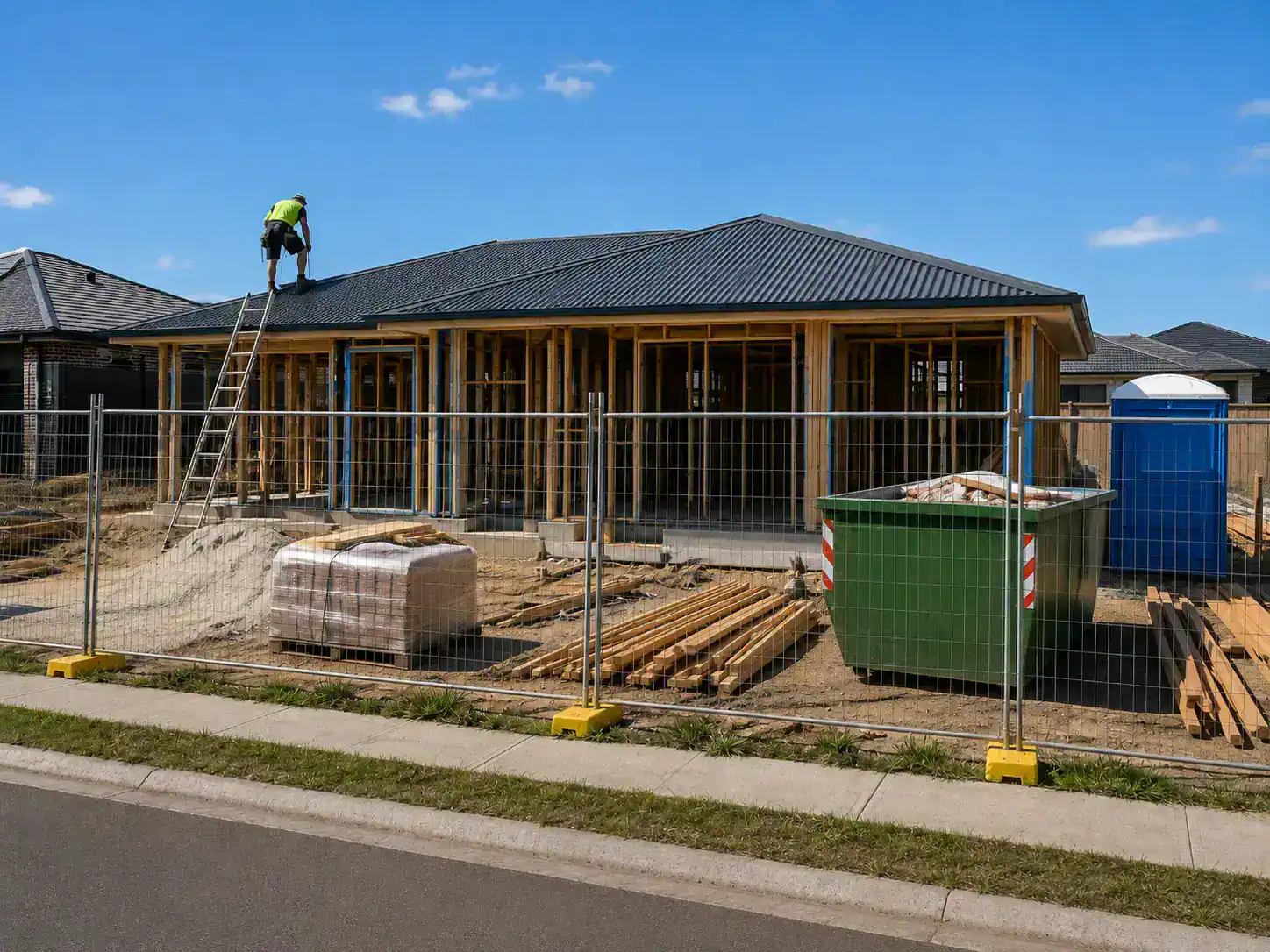
Once the design and relevant approvals are in place, the focus shifts to execution.
An investment renovation should not necessarily be treated the same way as a cosmetic renovation for an owner-occupied home.
Materials need to suit a higher-use environment, rooms need to function properly, and the project needs to remain aligned with its agreed scope, budget and intended use.
INVIDA works with experienced builders and helps coordinate the co-living conversion process from planning through to completion.
For investors choosing a new project instead, INVIDA also offers custom-built co-living homes designed around multi-tenant use from the beginning.
The goal is not simply to finish the build.
It is to create a property that works for residents and supports the investor’s longer-term strategy.
Specialist Insurance and Risk Management
Insurance should also be considered as part of the investment process, particularly where the property will operate differently from a conventional single-household rental.
Cover varies between insurers and policies, so investors should accurately disclose how the property will be used and seek appropriate advice about the cover available for their circumstances.
This is another example of why the approach matters.
A decision about the way a property is designed and used can influence not only tenant demand but also finance, legal obligations, management requirements and insurance.
Specialist Co-Living Property Management
The investment journey does not end at handover.
A property may have strong income potential on a spreadsheet, but ongoing performance still depends on occupancy, tenant selection, rent collection, maintenance, communication and operating costs.
This is particularly important in co-living because multiple tenancies create a different management environment from a conventional single-household rental.
INVIDA’s co-living property management service specialises in co-living and rooming accommodation, with systems covering tenant selection, leasing, maintenance, compliance, household management and owner reporting.
Good property management can also support efforts to maximise rental yield by helping reduce avoidable vacancies, keeping the property well maintained and responding quickly when issues arise.
For an investor who wants the property to operate as a relatively hands-off investment, experienced ongoing management is just as important as getting the conversion itself right.
How the INVIDA Property Experts Work Together
The real advantage of a team approach is coordination.
A typical INVIDA journey may involve:
1. Strategy
Clarify your financial position, investment objectives, risk profile and preferred property approach.
2. Property Assessment
Determine whether an existing property, conversion opportunity or custom build fits the strategy.
3. Finance and Feasibility
Understand funding requirements and consider the numbers before proceeding.
4. Design and Compliance
Develop a practical layout and establish the relevant planning, building and approval pathway.
5. Construction
Deliver the conversion or new build with the intended investment use in mind.
6. Furnishing and Tenant Placement
Prepare the completed property for the target rental market and begin securing suitable residents.
7. Ongoing Management
Manage leasing, maintenance, occupancy and the day-to-day operation of the property.
When those stages are treated completely separately, an investor can end up solving problems created by decisions made earlier in the project.
When the team communicates from the beginning, it becomes easier to keep the property, budget, end use and investment goals aligned.
That coordination is one of the reasons a specialist property investment team can be particularly valuable for a co-living investment.
What Can the Right Property Expert Achieve?

The value of a coordinated team becomes clearer when you look at completed projects.
INVIDA’s investor success stories include Queensland investor Lance Piper, whose property reportedly increased from $775 per week in rent to $1,550 per week following its co-living conversion. INVIDA reports that this represented a $40,300 annual uplift in rental income.
Every property, project and investor is different, so previous results should never be treated as a guarantee of future performance.
Purchase price, finance, construction costs, rental demand, vacancies, maintenance expenses and broader market conditions can all affect property investment returns.
What examples like this can demonstrate is why property acquisition, design, construction and management should not be considered in isolation.
For other examples of properties that have been transformed through the strategy, explore more INVIDA co-living investor results.
Why Building the Right Team Matters Before You Buy
One of the biggest mistakes an investor can make is assembling their specialists only after a problem appears.
The better approach is to have the relevant people involved early.
Your acquisition specialist should understand the type of property the design team needs.
Your broker should understand what you are proposing before finance becomes urgent.
Your design and compliance specialists should understand the intended use before construction begins.
Your builder should be working from a clearly defined scope.
And your property manager should understand the finished product, the likely resident demographic and how the property needs to operate once construction is complete.
It is not about having the largest possible team.
It is about having the right people, with the right experience, working towards the same outcome.
That is where the right team becomes especially useful for modern co-living investors.
Ready to Improve Your Return on Investment Property?
If you are already researching co-living, looking for your next property or wondering whether a property you own could perform better, the next step is not necessarily to start drawing plans or calling builders.
It is to determine whether the property and strategy actually stack up.
The right team can help you assess the opportunity, identify potential problems before they become expensive and create a clearer path from acquisition through to ongoing management.
At INVIDA, we help investors navigate the co-living journey from initial property assessment through to design, construction, tenant placement and ongoing management.
If you want to understand whether co-living may suit your goals, you can:
- Learn how INVIDA’s co-living conversion process works
- Explore our custom-built co-living options
- Read real INVIDA investor success stories
- Learn more about specialist co-living property management
- Browse our co-living FAQs
Ready to find out what could work for your property or investment goals? Book a strategy call with INVIDA and talk through your options with our team.