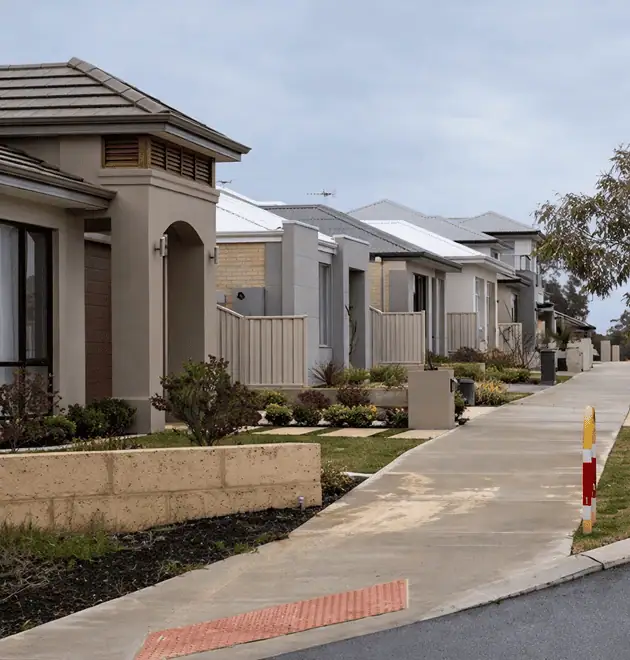
Perth Co-living

Perth Co-Living Investments: Designed for Yield, Resilience and Long-Term Demand

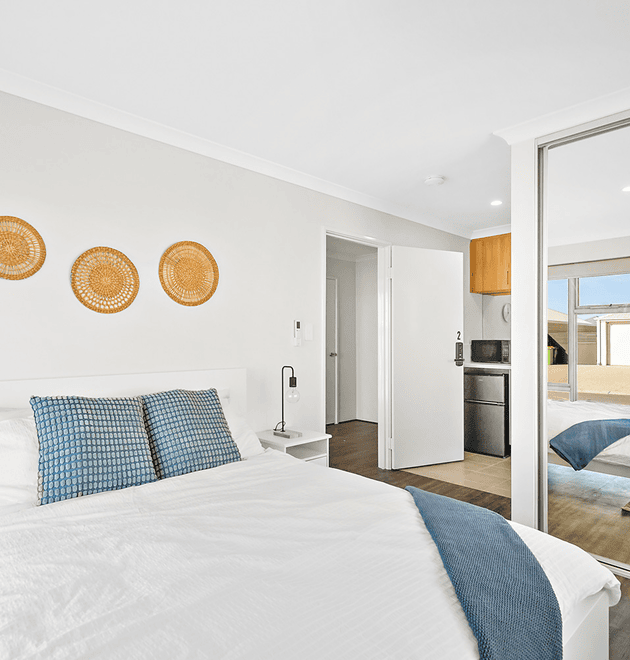
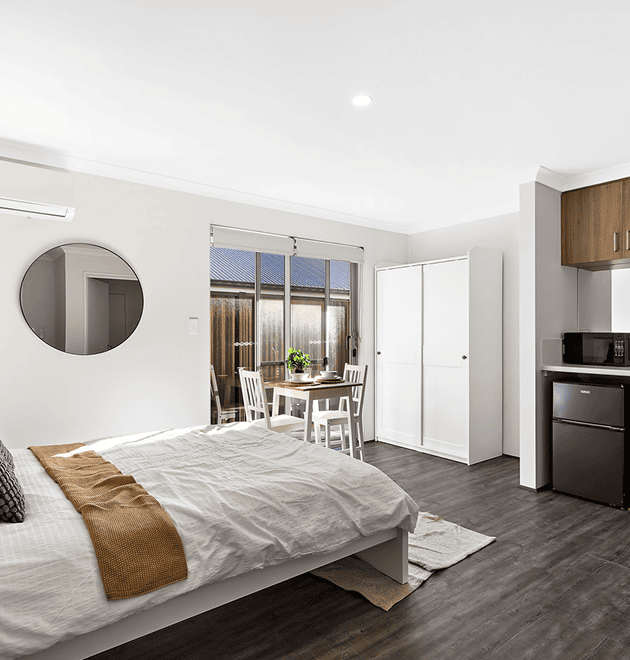
example of a room that is made for Perth Co-living

Why Co-Living Is a Strategic Investment in Perth

Perth presents one of Australia’s most compelling rental market environments. Strong interstate migration, sustained employment growth, infrastructure investment and tightening rental supply have created structural demand for alternative housing formats. In this context, co-living has emerged as a high-performance residential asset class.

Rather than relying on a single household for income, co-living properties generate multiple revenue streams from individual room leases. This diversified income model improves cash flow stability while responding directly to Perth’s growing affordability pressures. For investors seeking stronger yields without moving into commercial assets, co-living offers a scalable residential solution.
How Co-Living Properties Operate in Perth

Co-living homes typically feature private, lockable bedrooms combined with shared kitchens, living areas and amenities. Each resident leases individually, often with bundled utilities and services included in a predictable weekly cost.

In Perth’s current market, this format appeals to essential workers, professionals, trades, logistics staff, healthcare employees, educators and downsizers seeking affordable, well-located housing. As traditional rental supply remains constrained, co-living properties provide flexibility and cost clarity while maintaining quality standards.

Bedroom with a view in a Perth co-living property

Is Co-Living Right for You?

We’ll walk you through our proven co-living investment model, answer your questions, and show you how to maximise rental returns.

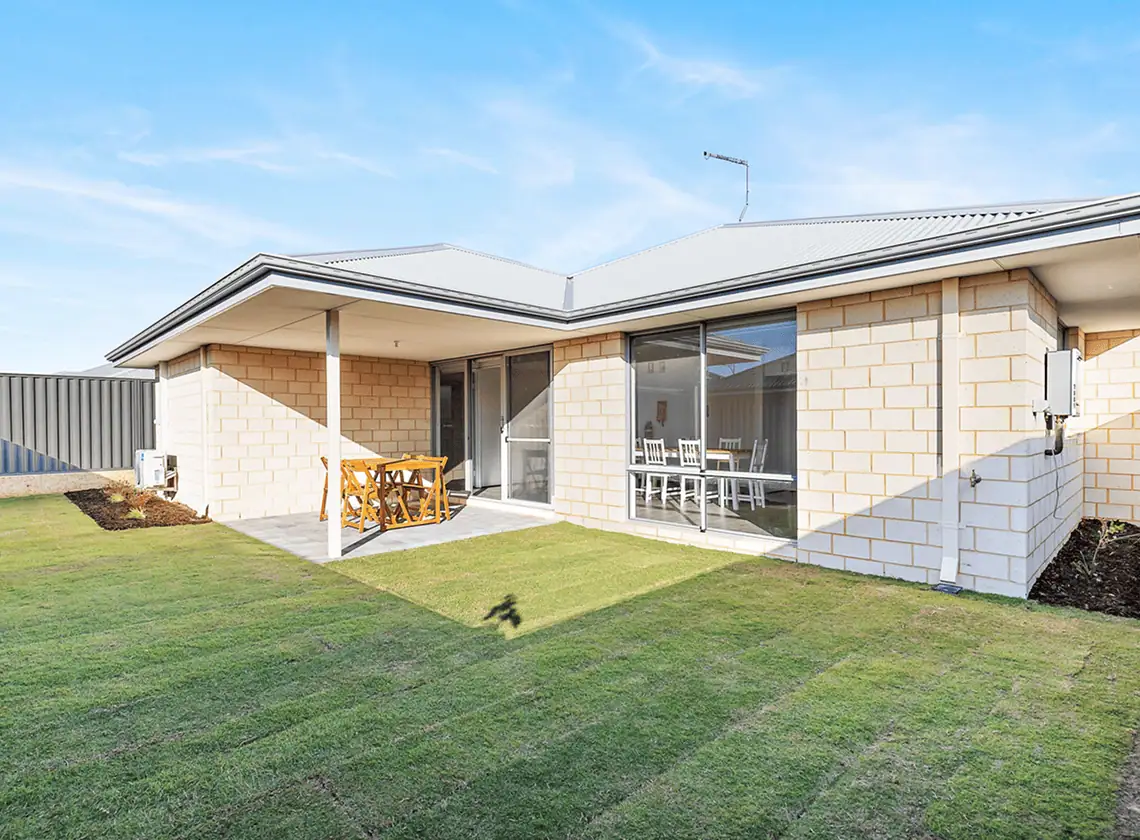
shared outdoor space for a Perth co-living home

The Market Conditions Supporting Co-Living in Perth

erth is now home to more than 2.3 million residents, with Western Australia leading the nation in interstate migration growth. Population expansion combined with prolonged housing undersupply has intensified pressure across the rental sector.

Vacancy rates across Greater Perth have consistently remained well below balanced market levels, while median rents have risen sharply across both houses and units. These conditions create sustained demand for housing models that maximise dwelling efficiency and improve affordability without requiring new large-scale construction.

Severe Rental Undersupply and Persistent Low Vacancy Rates

Perth continues to experience historically low vacancy rates, intensifying competition among renters. Co-living improves housing efficiency by converting single-household dwellings into professionally managed, multi-resident homes without relying on new construction

A Shift Toward Flexible, Cost-Controlled Living

Many renters are prioritising flexibility, affordability and predictable costs over traditional long-term leases. Perth co-living meets this need through private rooms, shared amenities and all-inclusive weekly pricing.

Population Growth Outpacing New Housing Supply

Interstate migration, skilled worker inflows and natural population growth are expanding Perth’s renter base faster than housing supply can respond. Scalable housing models like co-living adapt more effectively to this growth than standard rentals.

Rising Living Costs Increasing Demand for Inclusive Rentals

Rising living expenses have increased demand for rentals that bundle utilities, internet and services. Perth co-living offers cost clarity without sacrificing location or amenity.

Perth’s employment hubs (resources, health, construction, logistics, education and professional services) support consistent tenant demand, particularly in suburbs with strong transport connectivity.

Maribyrnong sits close to major employment hubs, hospitals, education providers, logistics precincts and retail centres. This location attracts a broad mix of tenants, including essential workers and professionals, who value accessible housing near work, transport and everyday services.

How Co-Living Helps Address Perth’s Housing Supply Challenge

Perth co-living delivers broader benefits beyond investment performance, offering a long-term response to rising housing stress and supply constraints.

Increasing Housing Capacity Using Existing Residential Stock

By repurposing underutilised large homes into professionally managed shared residences, co-living increases the effective supply of bedrooms in high-demand suburbs, without the delays or costs associated with large-scale development.

Delivering Affordable, Well-Located Housing Without Compromise

As one-bedroom apartments become increasingly unaffordable, co-living offers a high-quality alternative that allows tenants to live closer to employment hubs and transport at a lower price point than sole occupancy.

Supporting Density and Infrastructure Efficiency in Established Suburbs

Co-living supports more efficient use of existing infrastructure by increasing density within established suburbs. This reduces pressure for urban sprawl while making better use of transport networks and local services.

Improving Cash Flow Resilience Through Multi-Lease Income

The multi-lease structure of co-living provides built-in income diversification. Unlike a traditional rental where vacancy results in 0% income, co-living maintains cash flow even when individual rooms turn over, often delivering stronger net yields than standard residential investments.

For the forward-thinking investor, Perth co-living represents far more than a yield-driven strategy. It is a practical, future-focused response to some of the city’s most pressing housing challenges. By integrating co-living into your portfolio, you are directly contributing to a solution that addresses affordability constraints, limited rental supply and changing household needs across Greater Perth.

Well-designed co-living homes provide secure, dignified and professionally managed accommodation for the people who keep the city functioning. This includes essential healthcare workers, trades and construction professionals, educators, logistics staff, young professionals and downsizers seeking connection without compromise. These residents value stability, transparency and community, particularly in a rental market where choice is increasingly limited.

By offering housing that balances privacy with shared amenity, Perth co-living meets a genuine social need while remaining commercially resilient. The result is a true double bottom line: improved income stability and reduced vacancy risk for investors, alongside the delivery of long-term social value through accessible, well-located housing that supports Perth’s workforce and broader community.

What Makes Perth an Ideal Market for Co-Living Assets

Perth offers a compelling environment for co-living investors, supported by sustained rental demand, adaptable housing stock and strong employment fundamentals.

Sustained Tenant Demand Across Greater Perth

Persistently low vacancy rates combined with strong population growth support faster lease-up and dependable occupancy when co-living properties are well located and professionally managed.

Clear Opportunities to Lift Total Rental Income

Reconfiguring suitable Perth homes into three to five individually leased rooms can materially increase total rental income, even after allowing for higher management and service costs.

Stronger Yield Performance Through Multi-Lease Structures

Room-by-room leasing, supported by bundled utilities and services, often delivers stronger net yields than traditional single-tenancy houses in comparable locations.

Reliable Occupancy Across Multiple Perth Sub-Markets

Inner, middle and transport-connected outer suburbs across Perth continue to attract renters priced out of apartments, while still requiring access to employment hubs, education precincts and key infrastructure.

Evolving Planning Pathways for Alternative Housing Models

Western Australia’s planning environment is increasingly recognising the need for housing formats that improve affordability and supply efficiency, creating clearer pathways for compliant co-living projects when assessed correctly.

Scalable Investment Strategies With Flexible Exit Options

Investors can scale through multiple conversions or transition into purpose-built co-living assets, with growing market acceptance supporting long-term resale appeal and exit flexibility.

High-Performing Perth Suburbs for Co-Living Investment

Inner and Inner-Middle Perth: CBD-Connected Demand Zones (East Perth, Victoria Park, Bentley)

These suburbs offer proximity to the CBD, Curtin University, hospitals and major transport corridors, supporting consistent co-living demand from professionals and essential workers.

What to look for:

  • 4+ bedroom homes with 2+ bathrooms
  • Walkable access to bus routes, train stations and activity centres
  • Functional separation between bedrooms and communal areas

Watch-outs:

  • Local planning controls and parking minimums
  • Noise and traffic exposure near major arterials

Northern Growth Corridor: Rail-Linked and Population-Driven Demand (Joondalup, Wanneroo, Butler)

Strong population growth, health and education precincts and rail access underpin sustained rental demand across Perth’s northern corridor.

What to look for:

  • Homes near rail stations or bus interchanges
  • Practical floorplans that reduce household friction
  • Off-street parking capacity for multi-resident households

Watch-outs:

  • Estate covenants or design guidelines
  • Street-by-street demand variation

Southern Employment Corridor: Health, Education and Industrial Hubs (Murdoch, Hamilton Hill, Cockburn Central)

Proximity to Fiona Stanley Hospital, Murdoch University and industrial employment zones makes this corridor highly suitable for stable co-living households.

What to look for:

  • Solid construction and sound separation
  • Ability to support 4–5 bedrooms compliantly
  • Strong access to rail and arterial roads

Watch-outs:

  • Zoning and local amenity standards
  • Parking constraints near stations

Eastern Perth and Midland: Affordable Entry with Transport Access (Midland, Guildford, Belmont)

Affordable entry points combined with rail connectivity and growing commercial activity support strong co-living fundamentals.

What to look for:

  • Larger homes with flexible layouts
  • Proximity to rail stations and retail centres
  • Realistic upgrade potential for compliance

Watch-outs:

  • Flood overlays in select pockets
  • Property condition and maintenance costs

Important:

Always confirm local council planning controls, parking requirements and building standards before proceeding with a Perth co-living conversion. Early engagement with a town planner or certifier can prevent costly redesigns or approval delays.

homes that could be converted for Perth co-living investments
possible Perth co-living options near the water

Outer and Growth-Driven Perth Corridors: Emerging Co-Living Demand Zones

Several outer metro and growth-oriented corridors around Perth are attracting elevated housing interest thanks to a combination of affordability, infrastructure upgrades and population momentum. These areas are gaining attention from investors and renters alike due to rising demand, tight housing supply and strong relative growth fundamentals.

Northern Coastal and Greenfield Growth Corridor (Yanchep, Alkimos & Eglinton)

This northern corridor continues to expand with new communities, lifestyle amenities and improving transport connectivity supporting longer-term demand.

What to look for:

  • New estate developments with room for co-living-compatible dwellings
  • Proximity to future transport infrastructure and coastal amenity
  • Established community services and schools drawing young families and renters

Watch-outs:

  • Infrastructure delivery (e.g., roads, transit) can lag initial population growth. Consider staging timelines
  • Early-stage suburbs can see variable rental turnover

North-East Growth Sector (Ellenbrook & The Vines)

Ellenbrook and surrounding neighbourhoods are emerging as growth magnets due to planned transport connections and ongoing community investment.

What to look for:

  • Larger lots and flexible floorplans suited to multi-room conversions
  • Ridgelines offering access to Perth’s broader employment zones
  • Ongoing rezoning and amenity upgrades improving long-term appeal

Watch-outs:

  • Distance from the CBD increases reliance on transport link improvements
  • Demand may require targeted tenant screening to maintain stable households

South-West Expansion Belt (Baldivis & Rockingham)

The south-western corridor continues to benefit from a blend of affordability, established community infrastructure and strong rental dynamics compared with inner-metro Perth.

What to look for:

  • Affordable entry price points with above-average rental yields
  • Established retail, healthcare and schooling supporting long-term living
  • Proximity to industrial and logistics employment hubs

Watch-outs:

  • Some pockets may have lower transport frequency; ensure accessibility aligns with tenant needs
  • Local planning overlays vary; confirm compliance early

South-East and Inland Growth Nodes (Armadale, Byford & Kelmscott)

South-eastern Perth suburbs are gaining attention as lifestyle-oriented growth zones with comparatively strong rental interest and future infrastructure prospects.

What to look for:

  • Homes with multiple living zones that are convertible to co-living layouts
  • Improving transport links and community services enhancing appeal
  • Strong rental competition from families and commuters seeking value

Watch-outs:

  • Some areas have greater variance in household demand — tenant-centric design and management are essential
  • Check local parking and planning schedules before acquisition

Emerging co-living corridors in and around Perth continue to develop as demand spreads outward from traditional inner-metro zones. These areas benefit from affordability, amenity investment and projected demographic support, making them strong candidates for well-executed co-living models when located and managed appropriately. 

INVIDA’s End-to-End Approach to Perth Co-Living Performance

INVIDA provides end-to-end support designed to simplify Perth co-living and deliver stronger, more consistent returns.

Upfront Property Assessment and Compliance Validation

We assess zoning, planning controls, building standards and local council requirements before acquisition or conversion. This early-stage due diligence helps minimise approval risk, avoid costly redesigns and ensure each property is suitable for compliant co-living from the outset.

Purpose-Built Fit-Outs Designed for Fast Occupancy

Each home is optimised for shared living through considered layout planning, furnishing and presentation. The focus is on durability, privacy and functionality to support faster lease-up and a smooth tenant experience.

Structured Tenant Selection and Household Stability Management

We manage the full tenant lifecycle, including screening, leasing, maintenance coordination and clear household guidelines. This structured approach supports respectful shared environments and promotes longer-term household stability.

Operational Efficiency and Income Uplift Strategies

Bundled utilities, internet and cleaning services are structured to improve tenant appeal while simplifying day-to-day management. These inclusions support consistent pricing, reduce administrative complexity and help maximise total income per dwelling.

Continuous Regulatory Oversight and Risk Control

We actively monitor regulatory and compliance changes across Western Australia that may affect co-living operations. This ongoing oversight ensures your asset remains compliant, resilient and well-positioned over the long term.

Considering a Perth Co-Living Investment Strategy?

Start Planning Your Perth Co-Living Investment With INVIDA

Co-living is a practical strategy designed to meet Perth’s housing demand while improving portfolio performance. INVIDA supports you across strategy, property selection, compliance and ongoing management.

Download your free information pack today!

Scroll to Top

FREE LIVE MASTERCLASS

VENUE INFO (pending)
SATURDAY, MAR 29th 2025
10AM – 2PM AEST

Almost there! Please complete the fields below and click the button to instantly reserve your FREE TICKET. Seats are limited and events do sell out – so get in quick!

INVIDA Property Management

Name(Required)
Is your property currently under a tenancy agreement with another property manager?
Max. file size: 50 MB.