

#1: Check Where Co-Living Properties for Sale Are Listed
Not all co-living homes are advertised under that label, which means investors often need to look beyond standard listings to find suitable opportunities. Some properties may be marketed as dual-living homes, rooming houses or large family houses, even though they could work well as co-living investments.
When searching, investors should look in multiple places rather than relying on one property platform. Suitable listings can appear in:
- Standard real estate websites where larger homes or multi-room properties are advertised
- Off-market opportunities offered through buyer’s agents or investment networks
- New developments designed for multi-tenant living
- Older homes that can be renovated or converted to support several occupants
- Regional or outer-metro areas where larger properties are more affordable
#2: Know What Makes a Property Suitable for Co-Living
Beyond the location, the best co-living property is “future-proofed” through smart design and compliance. A good property will already meet or be easily adaptable to Class 1b building codes, which include specific fire safety measures, soundproofing between walls and accessibility requirements. These features help distinguish a professionally configured co-living property from a typical share house, and can make a significant difference in long-term performance, tenant demand and overall investment stability.
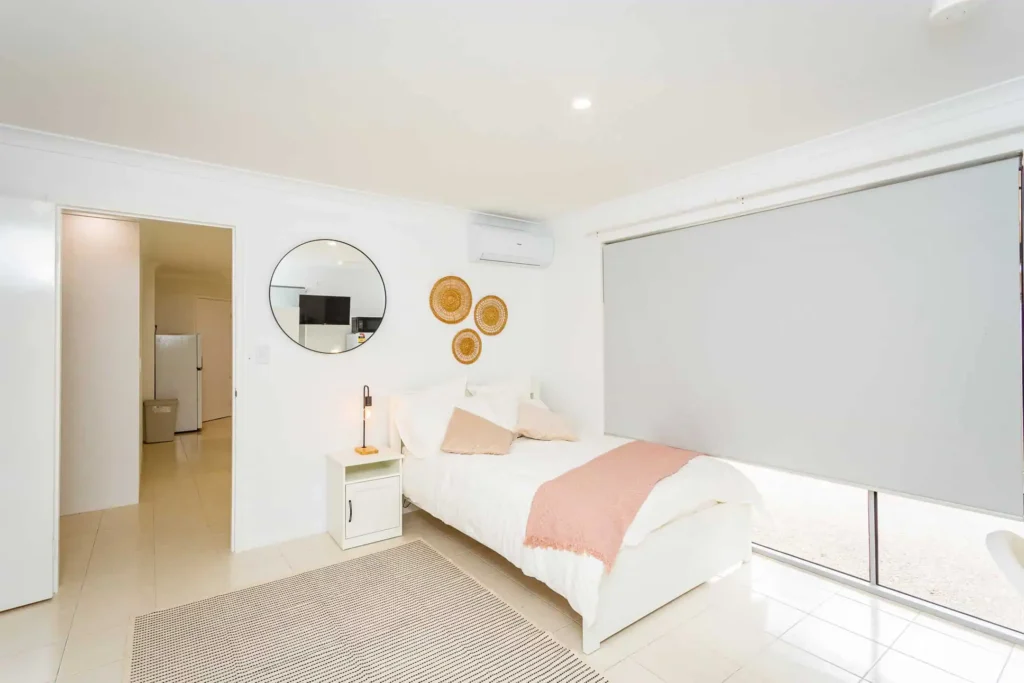
When evaluating your options, look for these specific indicators of quality:
Private Ensuites for Tenant Comfort
Private bathrooms are essential for attracting long-term residents who value independence and privacy. Properties with ensuite bathrooms often achieve better occupancy rates and reduce conflicts between tenants.
Kitchenette Features in Co-Living Properties for Sale
Many co-living properties include small kitchenette areas inside each room. Providing residents with a bar fridge, sink or basic prep space can reduce pressure on shared kitchens and improve overall tenant satisfaction.
Acoustic Treatment for Co-Living
Soundproofing between walls, floors and ceilings plays a major role in tenant retention. Proper acoustic treatment helps maintain privacy and makes multi-tenant living more comfortable for everyone in the property.
Zoning and Council Compliance
Before buying, confirm that the property is located in an area where multi-occupancy living is allowed. Local council rules, building classifications and safety requirements can affect how the property can be used.
Energy Efficiency and Running Costs
Features such as solar panels, efficient lighting and modern appliances help control utility costs, which are often included in co-living rental arrangements. Lower running costs can improve overall returns and make the property easier to manage.
#3: Understand the Different Co-Living Setups
The market for co-living properties for sale is diverse, offering various entry points depending on your budget and desired level of involvement. Generally, these assets fall into two distinct categories, each with its own advantages for investors using a co-living approach.
Converted Properties
These are existing houses converted with en-suites and kitchenettes to accommodate multiple tenants. This is a common co-living investment move for those looking to add value to older assets in established, high-demand suburbs where land is limited. To find out if your property qualifies, use our online eligibility tool.
Purpose-Built Homes
Engineered specifically for co-living, these co-living homes meet all Class 1b compliance and fire safety codes from day one. They are highly efficient, featuring layouts that maximise privacy and durability, making them a “turnkey” solution for modern investors.
#4: Compare Returns With Standard Rental Homes
The financial gap between co-living properties for sale and traditional houses is substantial. While a standard rental in major cities typically offers a gross yield of 3% to 4%, a co-living investment can achieve significantly higher returns. This performance is possible because the model “densifies” the income on a single title, leasing individual rooms rather than the entire building to one household.
- Risk Mitigation: In a traditional rental, a single vacancy results in a 100% loss of income.
- Cash Flow Stability: With co-living properties, the risk is spread across multiple micro-apartments, ensuring your cash flow remains positive even if one room is empty.
#5: Understand the Rules for Co-Living Properties

Navigating the regulatory landscape is critical, as co-living properties for sale are subject to stricter rules than standard rentals. Most high-yield co-living properties must comply with Class 1b building codes. These regulations ensure the safety of multiple unrelated residents living under one roof through:
- Integrated fire safety systems (smoke alarms and emergency lighting).
- Specific room size requirements to prevent overcrowding.
- Council-specific zoning laws regarding parking and communal facilities.
#6: Choose Areas With Strong Rental Demand
The success of your co-living investment depends on targeting yield hotspots where demand far outweighs supply. Co-living properties usually perform best near major employment hubs such as hospitals, universities and large commercial centres, where there is a steady flow of tenants looking for affordable and flexible housing options.
In areas with a shortage of smaller dwellings, rental demand is more likely to stay strong across different market conditions. Population growth, limited new housing supply and rising living costs can all contribute to higher occupancy rates, which helps maintain consistent income over time. Choosing the right suburb is often just as important as choosing the right property, as location plays a major role in long-term performance.
#7: Consider the Long-Term Value of Co-Living
Investors often ask if co-living properties for sale offer capital growth alongside high yields. Because many purpose-built designs resemble high-end family residences, they appeal not only to investors but also to future owner-occupiers. This creates a dual-exit strategy, allowing the property to be sold either as an investment or as a standard home depending on market conditions.
As Australian household structures continue to change, demand for flexible and smaller living arrangements is expected to remain strong. This shift supports the long-term relevance of co-living real estate, making it an asset class that can provide both ongoing rental income and potential resale value over time.
Is It Time to Buy Co-Living Properties for Sale?
Demand for co-living properties is rising as investors look for higher rental income, stronger occupancy and more flexible investment strategies. When chosen carefully, co-living properties can deliver better cash flow than standard rentals, but success depends on selecting the right property, location and layout from the start
Before buying co-living properties for sale, it is important to understand the rules, check the income potential and make sure the property suits long-term plans. If you are exploring this type of investment, speaking with a specialist can help you decide whether the strategy fits your goals and how to move forward with confidence.